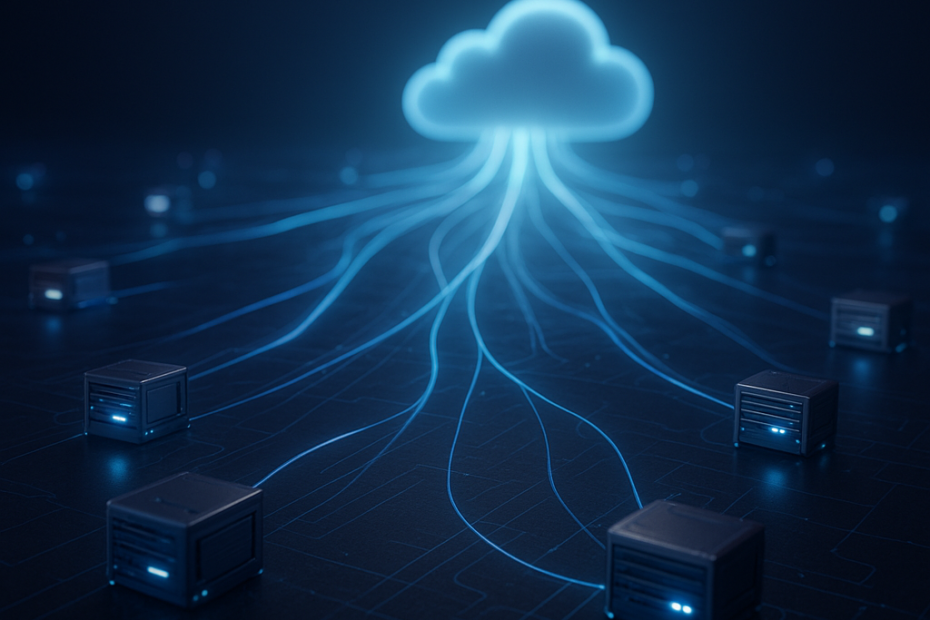
The way we process and move data is undergoing a quiet but profound transformation. For years, the dominant model was straightforward: collect data at the edges of a network, ship it to a centralised cloud or data centre, process it there, and send the results back. It worked well enough — until it didn’t. As connected devices multiplied into the billions and real-time applications became the norm rather than the exception, the cracks in that model started to show. Enter edge computing, a shift in thinking that’s reshaping how modern networks are designed from the ground up.
This isn’t just a trend buzzword. Edge computing has practical, measurable implications for latency, bandwidth costs, reliability, and security. Understanding it — really understanding it, not just the surface-level definition — is increasingly essential for anyone working with or thinking seriously about network infrastructure.
What Is Edge Computing, Exactly?
At its core, edge computing means processing data closer to where it’s generated rather than routing everything through a distant centralised server. The “edge” refers to the periphery of the network — think factory floors, retail locations, vehicles, hospitals, or even individual devices like smartphones and sensors.
A simple example helps make this concrete. Imagine a smart camera system on a manufacturing line, monitoring for product defects in real time. If every frame of video had to travel to a cloud server, get analysed, and return a result, the delay — even if measured in milliseconds — could be too slow for meaningful intervention. With edge computing, the analysis happens on a local device or nearby server. The decision is made almost instantly, and only the relevant outcome (a flag for a defective item, say) needs to be sent elsewhere.
This principle scales across industries. Autonomous vehicles processing sensor data in real time, hospitals monitoring patient vitals without relying on internet connectivity, smart energy grids balancing loads dynamically — all of these depend on computation happening at or near the source.
Edge Computing vs Cloud Computing: Understanding the Difference
One of the most common questions that arises here is how edge computing compares to cloud computing. The short answer is that they’re complementary rather than competitive — but the distinction matters when designing a network.
Cloud computing centralises resources. It’s excellent for tasks that require massive computational power, long-term data storage, complex machine learning model training, or workloads that aren’t time-sensitive. The cloud is powerful precisely because it pools resources at scale.
Edge computing distributes processing. It’s optimised for speed, local autonomy, and reducing the volume of data that needs to travel across networks. Rather than replacing the cloud, it handles the workloads for which the cloud is poorly suited — anything requiring near-instant responses or operating in environments with limited or unreliable connectivity.
In practice, most modern architectures blend both. Data might be processed initially at the edge for immediate action, then summarised or aggregated before being sent to the cloud for longer-term analysis and storage. According to research by Gartner, around 75% of enterprise-generated data is expected to be processed outside traditional centralised data centres by 2025 — a dramatic shift from a decade ago when that figure was closer to 10%.
Edge Computing Architecture: How It’s Structured
Understanding edge computing requires getting familiar with its layered architecture. While implementations vary, most edge computing models share a recognisable structure.
Device Layer
This is the outermost layer — the sensors, cameras, actuators, wearables, and connected machines that generate raw data. These devices often have limited processing power on their own, though increasingly they’re being built with onboard compute capabilities.
Edge Layer
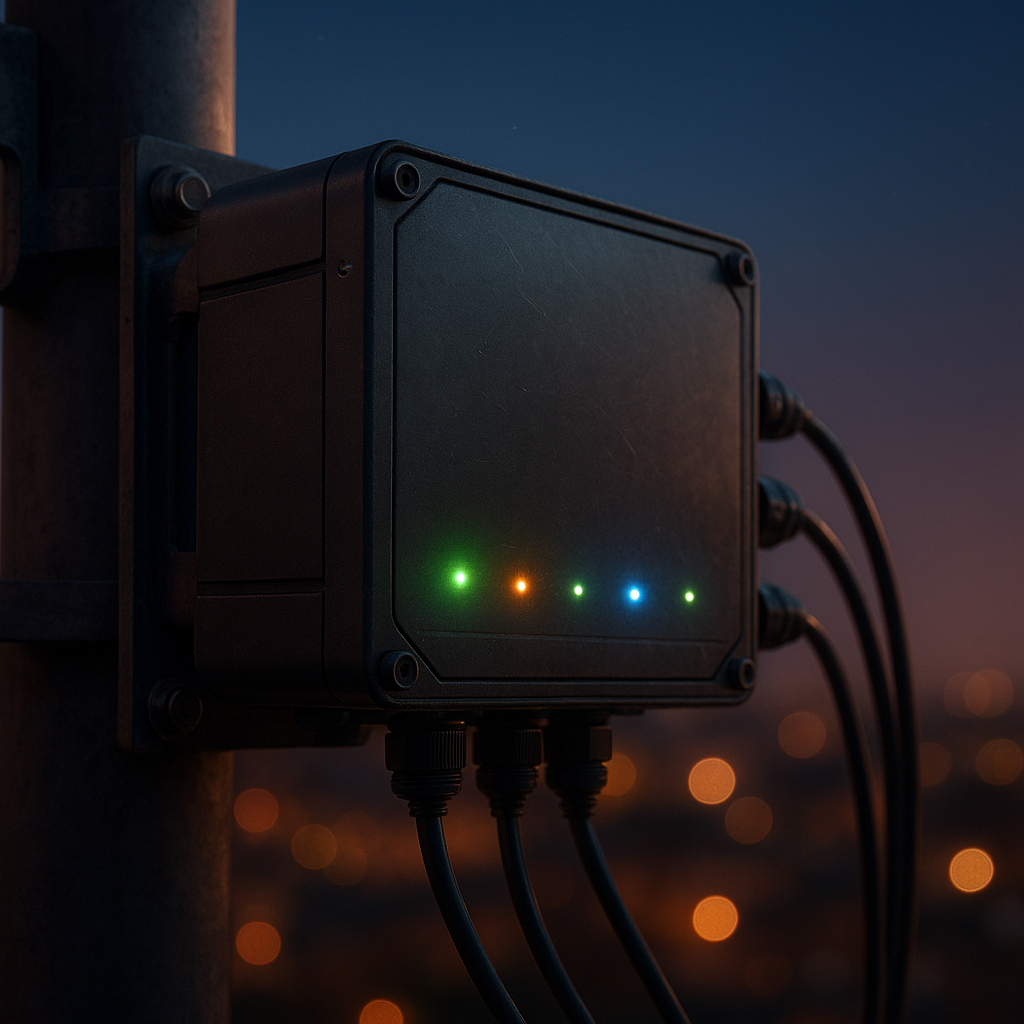
This is where the meaningful local processing happens. Edge nodes, gateways, and micro data centres sit here. They receive data from nearby devices, filter it, process it, and respond. This layer might exist in a factory’s server room, a retail store’s back office, a telecommunications base station, or even inside a vehicle.
Cloud or Core Layer
The centralised infrastructure that handles aggregated data, model training, long-term storage, and broader analytics. It communicates with the edge layer, often receiving cleaned and condensed data rather than raw streams.
The communication between these layers — and how efficiently that’s managed — is where network design becomes critically important. Edge computing doesn’t just change where processing happens; it changes how networks need to be built and managed.
What Edge Computing Means for Modern Network Design
This is where things get genuinely interesting for network architects and IT infrastructure teams. Edge computing introduces design challenges and considerations that didn’t exist — or weren’t nearly as pressing — in the purely cloud-centric model.
Latency and Bandwidth Optimisation
Traditional wide-area networks (WANs) were designed to move data reliably between locations, often without much concern for microsecond-level delays. Edge computing demands a rethink. When a local edge node needs to serve real-time responses, the network path between devices and that node needs to be optimised for low latency. This influences choices around network topology, switching hardware, and even physical cabling.
Equally important is the reduction in backhaul traffic. Instead of transmitting raw data streams to a cloud — which can be expensive and bandwidth-heavy — edge processing filters and compresses data locally. For organisations running large IoT deployments, this can represent meaningful cost savings on network infrastructure and data transfer fees.
Distributed Security Considerations
Centralised architectures have one major security advantage: fewer perimeter entry points to defend. Edge computing complicates this picture. With compute happening across dozens or hundreds of edge nodes, the attack surface expands considerably. Each node is a potential vulnerability, and ensuring consistent security policies across a distributed architecture requires careful planning.
This means network design must incorporate strong authentication between edge nodes and the core, encryption of data in transit and at rest at every layer, and robust mechanisms for remote monitoring and patching. Zero-trust network architecture — where no device or connection is trusted by default, regardless of location — is increasingly being adopted as a foundational principle for edge deployments. Organisations evaluating these approaches would do well to also consider the broader security risks in cloud environments, as hybrid architectures introduce overlapping vulnerabilities.
Resilience and Redundancy
One underappreciated benefit of edge computing is resilience. When a local edge node handles critical operations, those operations can continue even if connectivity to the central cloud is temporarily lost. For applications in remote locations, industrial environments, or sectors where downtime has serious consequences, this local autonomy is invaluable.
From a network design perspective, this means thinking carefully about failover paths, local storage for edge devices, and synchronisation strategies for when connectivity is restored. The network needs to gracefully handle disconnected or partially connected states rather than failing entirely.

Software-Defined Networking and Edge Management
Managing a sprawling edge infrastructure is a significant operational challenge. Software-defined networking (SDN) and network function virtualisation (NFV) are increasingly important tools here. They allow network behaviour to be controlled programmatically from a central management plane, making it feasible to apply consistent policies, route traffic intelligently, and respond to changes across a distributed network without manual intervention at each site.
Real-World Use Cases That Illustrate the Shift
Abstract architecture discussions are useful, but seeing edge computing in action makes the concepts land more concretely.
- Retail: Large supermarkets are using edge computing to run in-store analytics — tracking foot traffic, managing inventory via smart shelving, and processing contactless payments — locally, without depending on a cloud connection for every transaction.
- Healthcare: Wearable devices and bedside monitors process patient data at the edge, enabling real-time alerts for critical changes while reducing the volume of data sent to central systems.
- Telecommunications: 5G networks are fundamentally edge computing deployments. Multi-access edge computing (MEC) is built into 5G architecture, allowing applications to run on servers co-located with base stations, reducing latency for mobile users dramatically.
- Manufacturing: Predictive maintenance systems analyse vibration, temperature, and performance data from equipment locally, detecting anomalies before failures occur without requiring constant cloud connectivity.
- Smart Cities: Traffic management systems, environmental sensors, and public safety cameras process data locally to enable faster responses, with aggregated insights shared centrally for broader planning.
Edge Computing and Edge Networking: Are They the Same Thing?
There’s often some confusion between edge computing and edge networking, and it’s worth briefly clarifying the distinction. Edge networking refers specifically to the networking infrastructure at the periphery of a network — the routers, switches, gateways, and access points that sit at the boundary between an organisation’s internal network and external connections. It’s a networking concept that predates the edge computing movement.
Edge computing is broader and more encompassing. It includes the compute, storage, and application processing that happens at or near those network edges. In modern usage, edge computing and edge networking are deeply intertwined — you can’t build an effective edge computing deployment without thinking carefully about the networking that underpins it — but they’re not synonymous terms.
Challenges Worth Acknowledging
Edge computing is genuinely powerful, but it’s not without its difficulties. Deploying and managing hardware across many distributed locations is operationally complex and costly. Standardisation remains an ongoing challenge — the edge computing ecosystem involves many vendors with different approaches, and interoperability isn’t always straightforward.
There’s also the question of data governance. When data is processed locally before being sent to a central store, ensuring compliance with regulations like GDPR requires careful thought about what’s collected, where it’s processed, and how it’s stored at each edge node.
None of these are insurmountable challenges, but they’re real considerations that influence how organisations approach edge deployments. Thoughtful architecture, strong vendor evaluation, and clear governance frameworks go a long way towards addressing them.
Conclusion
Edge computing represents a meaningful evolution in how networks are conceived and built. Rather than treating the edge as simply a source of raw data to be shipped elsewhere for processing, modern network design increasingly treats it as an active, intelligent tier in its own right. The implications ripple outward — affecting latency, bandwidth costs, security architecture, resilience planning, and operational management.
The trend is clear and accelerating. The proliferation of IoT devices, the rollout of 5G, growing demand for real-time applications, and the practical limits of centralised processing are all driving organisations to rethink their network architectures. Understanding the principles of edge computing — not just the buzzword, but the architecture, the trade-offs, and the use cases — is foundational knowledge for anyone navigating modern infrastructure decisions. The edge isn’t coming; for many industries, it’s already here.